The Essential Toolkit for Facilitators of Adult Learning

Helping Massage Therapy Instructors Create Transformative Learning Experiences

Teaching adults is both an art and a science. Whether you’re leading a continuing education workshop, teaching in a massage therapy school, or presenting a webinar, effective instruction requires much more than expertise in your subject matter. Today’s adult learners expect engaging, relevant, and interactive educational experiences that help them apply new knowledge immediately in their professional lives.

As massage therapy educators, we have the unique opportunity to shape the future of our profession by helping therapists expand their skills, confidence, and competence. To do so effectively, instructors must develop a comprehensive toolkit that combines teaching expertise, learning theory, technology, and practical experience.

The Evolving Role of the Adult Educator

Modern instructors are expected to bring not only strong presentation skills and professional experience but also a solid understanding of adult learning principles and instructional design.

One of the most significant trends influencing education today is the integration of technology into the learning process. PowerPoint presentations, interactive online platforms, digital resources, videos, and three-dimensional graphics have become valuable tools for enhancing learner engagement and improving knowledge retention.

However, technology alone does not create great learning experiences. Successful instructors understand how to combine educational tools with sound teaching practices that meet the needs of diverse learners.

Building Your Professional Development Toolkit

Every effective facilitator of adult learning should continually develop and refine a set of core instructional competencies.

Master the Basics of Course Design and Delivery

Strong educational programs begin long before participants arrive in the classroom.

Instructors should be skilled in:

  • Conducting needs assessments
  • Developing clear learning objectives
  • Creating organized agendas
  • Selecting appropriate learning activities
  • Facilitating knowledge transfer
  • Designing meaningful evaluations

Thoughtful planning ensures that learning experiences are purposeful, engaging, and effective.

Understand Diverse Learning Styles

No two learners are exactly alike.

Some participants learn best through hands-on practice, while others prefer visual demonstrations, discussion, reading, or reflection. Effective instructors recognize these differences and incorporate multiple teaching methods to reach a broad range of learners.

When educators understand diverse learning styles, they create more inclusive and successful learning environments.

Learn to Read the Room

Great instructors continually assess their audience and adapt accordingly.

This requires the ability to:

  • Observe learner engagement
  • Evaluate understanding
  • Identify challenges
  • Adjust content delivery in real time

Many educational opportunities today involve “just-in-time learning,” where participants seek immediate solutions to current challenges. In these situations, flexibility becomes one of an instructor’s greatest assets.

Practice Reflective Teaching

Reflective practice is one of the most valuable skills an educator can develop.

By regularly evaluating what worked, what didn’t, and what could be improved, instructors become more effective over time. Reflection encourages continuous growth and helps educators create increasingly meaningful learning experiences.

Reflective practitioners also contribute to collaborative communities of learning, sharing insights and supporting professional development among peers.

Create Learning Laboratories

Adult learners thrive when they can actively explore concepts rather than simply receive information.

Effective instructors create opportunities for participants to:

  • Experiment with new techniques
  • Solve real-world problems
  • Practice critical thinking
  • Engage in meaningful discussion

Learning laboratories encourage discovery, confidence, and skill mastery.

Embrace Experiential Learning

Research consistently shows that adults learn best through experience.

Experiential learning activities may include:

  • Demonstrations
  • Role-playing
  • Hands-on practice
  • Group projects
  • Case studies
  • Guided reflection

The more actively learners participate, the more likely they are to retain and apply what they have learned.

Utilize Multiple Delivery Methods

Today’s learners expect flexibility.

Successful educators are increasingly skilled at delivering content through multiple formats, including:

  • In-person workshops
  • Live webinars
  • Online learning platforms
  • Hybrid educational models
  • Self-paced e-learning programs

The ability to teach effectively across various platforms expands both your reach and your impact.

Adopt Learner-Centered Instruction

Modern adult education places the learner—not the instructor—at the center of the educational experience.

Learner-centered instruction emphasizes:

  • Self-directed learning
  • Reflection
  • Personal application
  • Clarification of concepts
  • Guided discovery

Rather than simply transmitting information, educators serve as facilitators who help participants build their own understanding and competence.

An Integrative Approach to Professional Development

The most effective instructor development programs embrace an integrative approach that combines multiple dimensions of learning.

Professional development should:

  • Reflect adult education principles
  • Remain learner-centered
  • Encourage transformative learning
  • Address learner motivation
  • Support technology integration

When these elements work together, instructors are better equipped to create meaningful and lasting educational experiences.

Preparing for the Future of Education

As the professional landscape continues to evolve, instructors must prepare learners to navigate change, innovation, and growth.

Today’s educators should focus on helping learners develop skills in five critical areas:

1. Stimulating Creativity

Innovation begins with creativity. Instructors can encourage creative thinking by fostering curiosity, exploration, and problem-solving.

2. Assessing Innovation Opportunities

Learners need the ability to evaluate new ideas, techniques, and approaches critically and effectively.

3. Maintaining Client Focus

In massage therapy and wellness professions, client-centered care remains the foundation of successful practice.

4. Designing New Services

As client needs evolve, professionals must continually adapt and create innovative services that meet emerging demands.

5. Implementing Change

Change is inevitable. Effective educators help learners build the confidence and skills necessary to embrace and manage change successfully.

The Instructor’s Lasting Impact

Facilitating adult learning is far more than delivering information. It is about inspiring growth, encouraging transformation, and empowering learners to reach their full potential.

Whether you teach a small continuing education workshop, lead a massage therapy certification program, or present educational content online, your influence extends well beyond the classroom.

By continually expanding your instructional toolkit and embracing best practices in adult education, you can create learning experiences that inspire confidence, foster excellence, and advance the massage therapy profession for years to come.

Posted in Ariana Institute, CE Classes, continuing education, Massage Educators, Massage Therapy, Massage Therapy InstructorTagged , , ,

Teaching Massage Therapy Nationwide: Understanding NCBTMB Continuing Education Provider Requirements

For massage therapists who dream of teaching, sharing knowledge, and making a lasting impact on the profession, becoming an approved continuing education provider can open exciting new opportunities. Teaching not only diversifies your income stream but also allows you to contribute to the growth and advancement of fellow practitioners.

If you’re considering offering continuing education courses on a regional or national level, understanding the requirements established by the National Certification Board for Therapeutic Massage and Bodywork (NCBTMB) is essential. Here’s an overview of what it takes to become an approved provider and successfully deliver high-quality continuing education programs.

Why Become a Continuing Education Provider?

Teaching continuing education courses offers numerous benefits, including:

  • Expanding your professional influence
  • Sharing specialized knowledge and expertise
  • Creating additional revenue streams
  • Elevating standards within the massage profession
  • Supporting lifelong learning among massage therapists
  • Building your professional reputation as an industry leader

For many experienced therapists, teaching becomes a natural extension of their passion for helping others.

Instructor Qualifications

NCBTMB requires instructors to demonstrate expertise in the subject matter they wish to teach. New applicants must meet at least one of the following qualifications:

  • Hold a bachelor’s degree from an accredited institution in a field directly related to the course content.
  • Have at least five years of professional massage therapy experience.
  • Possess a minimum of two years of teaching experience.
  • Complete an NCBTMB-approved teacher training program.
  • Complete at least 100 hours of advanced education in the subject area and have at least two years of professional experience in that specialty.

These requirements help ensure that students receive instruction from qualified and experienced educators.

The Application Process

Applying to become an Approved Provider involves a comprehensive review process that evaluates both the instructor and the educational content.

Instructor Portfolio Review

Applicants submit documentation demonstrating:

  • Education
  • Professional experience
  • Subject matter expertise

Course Submission Requirements

Each course must include:

  • Course title
  • Course description
  • Learning outcomes and objectives
  • Detailed course outline or breakdown
  • Supporting documentation and citations

How Courses Are Evaluated

NCBTMB reviews each application carefully to ensure educational quality and professional standards are met.

Courses are evaluated to confirm:

  • Course content aligns with stated objectives and learning outcomes.
  • Information is properly cited.
  • No more than 30% of content comes from outside sources.
  • Instructor contact information is available to participants.

Applications may be denied if:

  • nstructor qualifications are insufficient.
  • Application materials are incomplete.
  • Course content is deemed unacceptable.
  • The course fails to meet NCBTMB standards.

In some cases, applications are referred to the Approved Provider Committee for additional review and recommendations.

Adding Courses and Instructors

Approval is not a one-time process.

New Courses

Every new course offered by an Approved Provider must be submitted separately for approval.

Additional Instructors

Organizations employing multiple instructors must submit each instructor for individual review to ensure they are qualified to teach specific courses.

Understanding Course Formats

NCBTMB recognizes several educational delivery methods.

Face-to-Face Courses

These courses involve live, in-person instruction where students and instructors are physically present together.

Important considerations include:

  • Continuing education credit is based on instructional time.
  • Homework may be assigned but does not count toward CE hours.
  • Meal breaks cannot be counted as instructional time.
Home Study Courses

Home study programs may be synchronous or asynchronous and can be delivered through

  • Online learning platforms
  • Email
  • Written materials
  • Recorded presentations

To qualify for CE credit, home study courses must include a final examination.

Home Study Exam Requirements

Final exams must:

  • Include at least five multiple-choice questions per hour of course content.
  • Be evidence-based with clearly correct answers.
  • Require a minimum passing score of 70%.
  • Inform participants of passing requirements in advance.

Live Webinars

Live webinars are considered synchronous educational experiences where instruction occurs in real time through online platforms.

Recorded or rebroadcast webinars are classified as home study courses rather than live webinars.

Assigning Continuing Education Hours

Approved Providers must justify the number of CE hours awarded for each course.

Face-to-Face Courses

CE hours generally correspond to instructional hours based on a 50-minute hour.

Home Study Courses

Suggested minimum guidelines include:

  • 12,000 words of reading = 1 CE hour
  • 1 hour of audio or video content = 1 CE hour

Additional CE hours may be awarded for assignments and educational activities if properly documented and approved.

Some providers work with instructional designers to establish appropriate CE credit assignments based on educational best practices.

Acceptable Course Content

NCBTMB approves a broad range of educational topics relevant to massage therapy practice.

Examples include:

  • Anatomy, physiology, and kinesiology
  • Assessment and documentation skills
  • Research literacy
  • Ethics and professional standards
  • Communication and interpersonal skills
  • Massage applications for specific populations and conditions
  • Business and marketing strategies
  • Infection control and hygiene
  • Ergonomics and therapist self-care
  • Advanced science education
  • Hands-on energy work involving therapeutic touch

It’s important to note that self-care content is limited to four CE hours per renewal cycle.

Unacceptable Course Content

To protect public safety and professional standards, certain topics are prohibited.

  • Medical diagnosis
  • Surgical procedures
  • Psychological counseling
  • Acupuncture and dry needling
  • Hypnosis
  • Electrical stimulation modalities
  • Psychic or clairvoyant practices
  • Cannabis oil applications
  • Crystal healing
  • Aura techniques
  • Sound therapy
  • Tuning forks
  • Light therapy
  • Fire cupping
  • Qi Gong and Tai Chi instruction
  • Practices that exceed massage therapy scope of practice

NCBTMB reserves the right to reject any course that lacks scientific support, presents safety concerns, or violates applicable laws and regulations.

Maintaining Professional Integrity

One important principle of continuing education is that completing a course does not certify a participant in a modality or specialty area. Approved Providers issue Certificates of Achievement or Completion, but additional training and experience are often necessary to develop true proficiency.

Providers are encouraged to communicate this distinction clearly to participants.

The Opportunity to Shape the Future

Teaching continuing education is more than simply delivering information—it’s an opportunity to mentor, inspire, and elevate the massage therapy profession. By understanding NCBTMB requirements and creating educational experiences grounded in quality, ethics, and evidence-informed practice, instructors can make a meaningful contribution to the field while expanding their own professional horizons.
For massage therapists who feel called to teach, becoming an NCBTMB Approved Provider can be the beginning of an exciting and rewarding new chapter in their career journey.

Posted in Ariana Institute, CE Classes, continuing education, Massage Therapy Instructor, NCBTMBTagged , , ,

BECOMING A CE PROVIDER IN TEXAS

A quick note and distinction between an MTI and a CE provider. The CE Provider authorizes a person to issue the CE certificate and teach acceptable subjects that they are qualified to teach per the rules (e.g., a CPA could hold the CE Provider and teach business for MTs). The MTI authorizes an MT to teach massage therapy technique – at a school, by teaching massage and supervising internship or teaching CE on massage technique for the school; or as CE on massage technique independent of a school if he/she also holds the CE Provider license.

Texas’s TDLR CE provider instructions

Instructor Requirements

• Massage therapy techniques and courses involving the manipulation of soft tissue must be taught or presented by a licensed massage therapy instructor.

• Advanced massage therapy or bodywork techniques must be taught or presented by persons with licensure, registration or education in the technique being presented.

• Courses, other than techniques, may be taught or presented by persons with licensure, registration, education or practical experience in the subject being presented.

Curriculum Requirements

Acceptable Course Curriculum

Acceptable continuing education includes attendance and completion of courses that are directly related to the theory or clinical application of theory pertaining to the following:

• Practice of massage therapy

• The manipulation of soft tissue

• Massage therapy laws and rules

• Business practices

• Professional ethics

• Anatomy

• Physiology

• Hydrotherapy

• Kinesiology

• Pathology

• Health and hygiene

Courses must be designed to increase and enhance professional knowledge, skills or competence and be provided by a TDLR-approved provider or one of these recognized continuing education providers:

• Institutes

• Seminars

• Workshops

• State or national conferences

• Advanced coursework

• College and university academic courses

Bodywork Classes

Most massage and bodywork modalities are acceptable, provided the sponsor is acceptable. Unacceptable modalities would include activities which are not part of providing a massage (e.g. ear candling) or that require another license (e.g. chiropractic adjustments).

Energy Work Classes

Most energy work classes are acceptable, provided the sponsor is acceptable. They must be designed to enhance the provision of massage, and they may not involve any false or misleading health claims (e.g., claiming to cure or treat diseases).

Exercise or Movement Classes

Yoga, martial arts, and exercise classes are not acceptable unless they are specifically designed as self-care for massage therapists.

First Aid or CPR

Courses in first aid and/or CPR will be accepted if the course is taught or presented by a certified First Aid Instructor or certified CPR instructor who was certified by the American Heart Association, American Red Cross or National Safety Council. Courses cannot exceed six hours total each renewal period.

Unacceptable Course Curriculum

The department shall not give continuing education credit for the following:

• Education incidental to the regular professional activities of a massage therapist, such as learning occurring from experience or research

• Professional organizational activity, such as serving on committees or councils or as an officer in a professional organization

• College academic courses which are audited or not taken for credit

• Independent study, except online or correspondence courses in accordance with the acceptable continuing education requirements of this subchapter

• Any experience that does not comply with the approved continuing education in §117.31 of the Massage Therapy Administrative Rules.

Pre-Approval of Course Curriculum

The department does not pre-approve CE programs. Please consult the Acceptable Course Curriculum section and the Massage Therapy Administrative Rules to determine whether or not the program is acceptable. If the sponsor, content, and certificate are acceptable, you may use that program for continuing education toward license renewal.

All licensed massage therapy schools are also approved to provide continuing education and may issue either continuing education certificates or transcripts showing advanced course work (as described in the rules, §117.60. Massage School Advanced Course Work). 

Student Attendance Records

Approved providers are required to maintain attendance records of all continuing education activities for a period of 5 years.

An approved provider must also issue a certificate of attendance to each participant in a course program. The certificate of attendance shall contain:

1. The name of the approved provider and approval number

2. The name of the participant

3. The title of the program

4. The number of credit hours given

5. The subject(s) included in the program

6. The date and place of the program

7. The signature of the approved provider

The department may audit approved providers for compliance with the Massage Therapy Administrative Rules.

Renewal of Approval

Continuing education providers will receive a renewal notice via email and regular mail at their address of record prior to their approval expiration date. Providers must return the renewal notice along with the designated fee before the approval expiration date.

Provider renewals postmarked after the expiration date will not be able to renew and will be required to submit a new application for CE provider approval.

If you do not receive a renewal notice, please contact TDLR at https://ga.tdlr.texas.gov:1443/form/csgeneralinquiry.

Posted in Ariana Institute, Ariana Vincent, CE Classes, Massage Educators, Massage Therapy InstructorTagged , ,

My Journey as a Massage Therapy Instructor and Continuing Education Provider

By Ariana Vincent, LMT, MTI, NCBTMB CE Provider

Becoming a Massage Therapy Instructor (MTI) after more than twenty years as a Licensed Massage Therapist was a natural evolution in my professional journey. Teaching allowed me to diversify my career while remaining deeply connected to a profession that I love. The years I spent working directly with clients provided a strong foundation and valuable real-world perspective that I could bring into every class I developed and taught.

My educational journey began long before I entered the massage profession. After graduating from the University of Texas in 1979, I pursued graduate studies in the Department of Education at Texas State University. My interest in learning and teaching would later become an integral part of my professional identity.

My introduction to massage therapy began in 1982 when I participated in massage classes before Texas established state licensing requirements. Once licensing became mandatory, I completed the in-depth core curriculum necessary for professional practice. As my passion for the field grew, so did my commitment to lifelong learning.

Over the years, I pursued extensive continuing education in a wide range of specialties, including Marketing, Ethics, Ayurveda, Therapeutic Touch, Hot Stone Therapy, Prenatal Massage, CranioSacral Therapy, Deep Tissue Massage, Trigger Point Therapy, Myofascial Techniques, Shiatsu, Oncology Massage, Geriatric Massage, PTSD-related care, and Lomi Lomi with Pualani. 

I also attended seminars and workshops through organizations such as the World Massage Festival (WMF), the American Massage Therapy Association (AMTA), and the Alliance for Massage Therapy Education (AFMTE).

After becoming an approved Massage Therapy Instructor and Continuing Education Provider in Texas, I expanded my reach by becoming a nationally approved continuing education provider through the National Certification Board for Therapeutic Massage and Bodywork (NCBTMB). This milestone allowed me to share my knowledge with massage professionals across the country.

Throughout my career, I have been fortunate to learn from exceptional mentors. One mentor, in particular, encouraged me to begin writing books. That simple suggestion became a turning point in my career, ultimately leading to the publication of eight massage therapy books, numerous articles, and more than thirty comprehensive course manuals.

Mentorship has played a significant role in my growth. In 1998, I was mentored by a group of graduate students from the McCombs School of Business at the University of Texas. Their guidance helped me strengthen the business side of my practice and educational offerings. More recently, in 2021, I was blessed to connect with additional mentors through my involvement with the Alliance for Massage Therapy Education, whose support and wisdom continue to inspire me.

As my educational programs evolved, I embraced new methods of teaching and learning. After developing hands-on courses and extensive course notebooks, I expanded into online education. I created digital learning experiences by uploading course materials—including text, graphics, videos, assessments, and evaluations—to a Learning Management System (LMS). Through these online offerings, I was able to reach massage therapists nationwide and make quality continuing education more accessible.

My twenty-five-year career as a Massage Therapy Instructor has been one of the most rewarding experiences of my life. Teaching has provided me with a profound sense of purpose and fulfillment unlike any other professional role I have held. It has allowed me to support the growth of fellow therapists, contribute to the advancement of our profession, and remain a lifelong student myself.

I hold a deep respect for the massage therapy profession and for the dedicated practitioners who serve others through the healing power of touch. Whether your path leads you into clinical practice, spa work, specialized modalities, education, or leadership, I encourage you to continue learning, growing, and sharing your gifts with the world.

My hope is that you will find this career path as meaningful, inspiring, and fulfilling as I have.

Posted in CE Classes, continuing education, Massage Educators, Massage Therapy, Massage Therapy InstructorTagged , ,

MASSAGE Magazine’s “30 on 30 – Massage Experts” Article

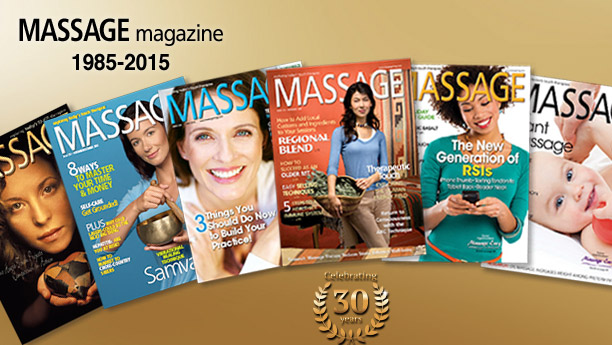
MASSAGE Magazine covers

MASSAGE Magazine’s recent article, “30 on 30: Massage Experts on 30 Years of Massage Therapy,” featured Ariana Vincent, L.M.T., M.T.I., B.C.T.M.B. The article highlights the experiences, impressions, and opinions of massage experts, therapists, and educators about the massage profession’s evolution over three decades.

Continue reading “MASSAGE Magazine’s “30 on 30 – Massage Experts” Article”

Posted in Ariana Institute, Ariana Vincent, CE Classes, continuing education, Massage Therapy, Massage Therapy Instructor, PublicationsTagged , , , , ,

Positive Influence – PART 3

_Ariana - Portrait with Hands on Client's Back - ZR - Excellent - IMG_3620Beginning Your Career as a Massage Therapy Instructor
There are myriad ways you can configure your career as an MTI. You can work part-time or full-time, you can use your experiences as an MTI as a stepping-stone to another career, you can focus on being an MTI as a second career, you can blend teaching with your current vibrant massage therapy practice, or you can supplement your retirement income by becoming an MTI. There are opportunities to work as an independent massage therapy instructor like I do, you can work as an instructor at an established massage therapy school, and/or you can work for a nationwide company that provides massage therapy classes throughout the U.S. Continue reading “Positive Influence – PART 3”

Posted in Ariana Institute, Ariana Vincent, CE Classes, continuing education, Massage Therapy, Massage Therapy Instructor, Publications, UncategorizedTagged , , , , , , ,

Positive Influence – PART 2

Ariana with hands on client's back - ZR - IMG_3624What to Look for in a Massage Therapy Instructor’s Course

The first step would be to research and decide whether you prefer an online MTI course or a course that is offered in a classroom environment. Many people prefer an online course since the information presented in an MTI course is cognitive in nature and the online format lends itself well to cognitive classes, while other students prefer personal interactions in a classroom setting. There are also financial considerations to be contemplated; the tuition for an online course is usually less expensive than a classroom course. Online courses also take less time away from income-producing activities while accomplishing the goal of successfully completing an MTI course and beginning a career as an MTI. Here is a testimonial from a student, “I was fully challenged to retain and learn new information. This course was accessible to me online which I love because I don’t have the time for traveling for CEs. Thank you so much giving LMTs like me the opportunity to excel in business and in life. Completing this course makes me feel self-sufficient. Thank you!” – Sabrina Quebe, LMT, MTI Continue reading “Positive Influence – PART 2”

Posted in Ariana Institute, Ariana Vincent, CE Classes, continuing education, Massage Therapy, Massage Therapy Instructor, Publications, UncategorizedTagged , , , , , , ,

Positive Influence – Part 1

Ariana

The Paths to Becoming a Massage Therapy Instructor
Serving as a Massage Therapy Instructor and Continuing Education Provider has been a vehicle that has facilitated the opening of my heart and my intellect in unimaginable ways as part of my devotion to a path of service. When you look within yourself and evaluate your life, do you feel that you have the desire to make a meaningful difference in the lives of others? You could actualize this goal by becoming a Massage Therapy Instructor (MTI). Not only would you be living a virtuous life of service, but you would also concurrently be adding another stream of income to your professional portfolio. If you find this path to be of interest, here are some guidelines that will help facilitate your success. Continue reading “Positive Influence – Part 1”

Posted in Ariana Institute, Ariana Vincent, continuing education, Massage Therapy, Massage Therapy Instructor, PublicationsTagged , , , , , , , ,

Copyright © 2026 Ariana Institute