The Essential Toolkit for Facilitators of Adult Learning

Helping Massage Therapy Instructors Create Transformative Learning Experiences

Teaching adults is both an art and a science. Whether you’re leading a continuing education workshop, teaching in a massage therapy school, or presenting a webinar, effective instruction requires much more than expertise in your subject matter. Today’s adult learners expect engaging, relevant, and interactive educational experiences that help them apply new knowledge immediately in their professional lives.

As massage therapy educators, we have the unique opportunity to shape the future of our profession by helping therapists expand their skills, confidence, and competence. To do so effectively, instructors must develop a comprehensive toolkit that combines teaching expertise, learning theory, technology, and practical experience.

The Evolving Role of the Adult Educator

Modern instructors are expected to bring not only strong presentation skills and professional experience but also a solid understanding of adult learning principles and instructional design.

One of the most significant trends influencing education today is the integration of technology into the learning process. PowerPoint presentations, interactive online platforms, digital resources, videos, and three-dimensional graphics have become valuable tools for enhancing learner engagement and improving knowledge retention.

However, technology alone does not create great learning experiences. Successful instructors understand how to combine educational tools with sound teaching practices that meet the needs of diverse learners.

Building Your Professional Development Toolkit

Every effective facilitator of adult learning should continually develop and refine a set of core instructional competencies.

Master the Basics of Course Design and Delivery

Strong educational programs begin long before participants arrive in the classroom.

Instructors should be skilled in:

  • Conducting needs assessments
  • Developing clear learning objectives
  • Creating organized agendas
  • Selecting appropriate learning activities
  • Facilitating knowledge transfer
  • Designing meaningful evaluations

Thoughtful planning ensures that learning experiences are purposeful, engaging, and effective.

Understand Diverse Learning Styles

No two learners are exactly alike.

Some participants learn best through hands-on practice, while others prefer visual demonstrations, discussion, reading, or reflection. Effective instructors recognize these differences and incorporate multiple teaching methods to reach a broad range of learners.

When educators understand diverse learning styles, they create more inclusive and successful learning environments.

Learn to Read the Room

Great instructors continually assess their audience and adapt accordingly.

This requires the ability to:

  • Observe learner engagement
  • Evaluate understanding
  • Identify challenges
  • Adjust content delivery in real time

Many educational opportunities today involve “just-in-time learning,” where participants seek immediate solutions to current challenges. In these situations, flexibility becomes one of an instructor’s greatest assets.

Practice Reflective Teaching

Reflective practice is one of the most valuable skills an educator can develop.

By regularly evaluating what worked, what didn’t, and what could be improved, instructors become more effective over time. Reflection encourages continuous growth and helps educators create increasingly meaningful learning experiences.

Reflective practitioners also contribute to collaborative communities of learning, sharing insights and supporting professional development among peers.

Create Learning Laboratories

Adult learners thrive when they can actively explore concepts rather than simply receive information.

Effective instructors create opportunities for participants to:

  • Experiment with new techniques
  • Solve real-world problems
  • Practice critical thinking
  • Engage in meaningful discussion

Learning laboratories encourage discovery, confidence, and skill mastery.

Embrace Experiential Learning

Research consistently shows that adults learn best through experience.

Experiential learning activities may include:

  • Demonstrations
  • Role-playing
  • Hands-on practice
  • Group projects
  • Case studies
  • Guided reflection

The more actively learners participate, the more likely they are to retain and apply what they have learned.

Utilize Multiple Delivery Methods

Today’s learners expect flexibility.

Successful educators are increasingly skilled at delivering content through multiple formats, including:

  • In-person workshops
  • Live webinars
  • Online learning platforms
  • Hybrid educational models
  • Self-paced e-learning programs

The ability to teach effectively across various platforms expands both your reach and your impact.

Adopt Learner-Centered Instruction

Modern adult education places the learner—not the instructor—at the center of the educational experience.

Learner-centered instruction emphasizes:

  • Self-directed learning
  • Reflection
  • Personal application
  • Clarification of concepts
  • Guided discovery

Rather than simply transmitting information, educators serve as facilitators who help participants build their own understanding and competence.

An Integrative Approach to Professional Development

The most effective instructor development programs embrace an integrative approach that combines multiple dimensions of learning.

Professional development should:

  • Reflect adult education principles
  • Remain learner-centered
  • Encourage transformative learning
  • Address learner motivation
  • Support technology integration

When these elements work together, instructors are better equipped to create meaningful and lasting educational experiences.

Preparing for the Future of Education

As the professional landscape continues to evolve, instructors must prepare learners to navigate change, innovation, and growth.

Today’s educators should focus on helping learners develop skills in five critical areas:

1. Stimulating Creativity

Innovation begins with creativity. Instructors can encourage creative thinking by fostering curiosity, exploration, and problem-solving.

2. Assessing Innovation Opportunities

Learners need the ability to evaluate new ideas, techniques, and approaches critically and effectively.

3. Maintaining Client Focus

In massage therapy and wellness professions, client-centered care remains the foundation of successful practice.

4. Designing New Services

As client needs evolve, professionals must continually adapt and create innovative services that meet emerging demands.

5. Implementing Change

Change is inevitable. Effective educators help learners build the confidence and skills necessary to embrace and manage change successfully.

The Instructor’s Lasting Impact

Facilitating adult learning is far more than delivering information. It is about inspiring growth, encouraging transformation, and empowering learners to reach their full potential.

Whether you teach a small continuing education workshop, lead a massage therapy certification program, or present educational content online, your influence extends well beyond the classroom.

By continually expanding your instructional toolkit and embracing best practices in adult education, you can create learning experiences that inspire confidence, foster excellence, and advance the massage therapy profession for years to come.

Posted in Ariana Institute, CE Classes, continuing education, Massage Educators, Massage Therapy, Massage Therapy InstructorTagged , , ,

Teaching Massage Therapy Nationwide: Understanding NCBTMB Continuing Education Provider Requirements

For massage therapists who dream of teaching, sharing knowledge, and making a lasting impact on the profession, becoming an approved continuing education provider can open exciting new opportunities. Teaching not only diversifies your income stream but also allows you to contribute to the growth and advancement of fellow practitioners.

If you’re considering offering continuing education courses on a regional or national level, understanding the requirements established by the National Certification Board for Therapeutic Massage and Bodywork (NCBTMB) is essential. Here’s an overview of what it takes to become an approved provider and successfully deliver high-quality continuing education programs.

Why Become a Continuing Education Provider?

Teaching continuing education courses offers numerous benefits, including:

  • Expanding your professional influence
  • Sharing specialized knowledge and expertise
  • Creating additional revenue streams
  • Elevating standards within the massage profession
  • Supporting lifelong learning among massage therapists
  • Building your professional reputation as an industry leader

For many experienced therapists, teaching becomes a natural extension of their passion for helping others.

Instructor Qualifications

NCBTMB requires instructors to demonstrate expertise in the subject matter they wish to teach. New applicants must meet at least one of the following qualifications:

  • Hold a bachelor’s degree from an accredited institution in a field directly related to the course content.
  • Have at least five years of professional massage therapy experience.
  • Possess a minimum of two years of teaching experience.
  • Complete an NCBTMB-approved teacher training program.
  • Complete at least 100 hours of advanced education in the subject area and have at least two years of professional experience in that specialty.

These requirements help ensure that students receive instruction from qualified and experienced educators.

The Application Process

Applying to become an Approved Provider involves a comprehensive review process that evaluates both the instructor and the educational content.

Instructor Portfolio Review

Applicants submit documentation demonstrating:

  • Education
  • Professional experience
  • Subject matter expertise

Course Submission Requirements

Each course must include:

  • Course title
  • Course description
  • Learning outcomes and objectives
  • Detailed course outline or breakdown
  • Supporting documentation and citations

How Courses Are Evaluated

NCBTMB reviews each application carefully to ensure educational quality and professional standards are met.

Courses are evaluated to confirm:

  • Course content aligns with stated objectives and learning outcomes.
  • Information is properly cited.
  • No more than 30% of content comes from outside sources.
  • Instructor contact information is available to participants.

Applications may be denied if:

  • nstructor qualifications are insufficient.
  • Application materials are incomplete.
  • Course content is deemed unacceptable.
  • The course fails to meet NCBTMB standards.

In some cases, applications are referred to the Approved Provider Committee for additional review and recommendations.

Adding Courses and Instructors

Approval is not a one-time process.

New Courses

Every new course offered by an Approved Provider must be submitted separately for approval.

Additional Instructors

Organizations employing multiple instructors must submit each instructor for individual review to ensure they are qualified to teach specific courses.

Understanding Course Formats

NCBTMB recognizes several educational delivery methods.

Face-to-Face Courses

These courses involve live, in-person instruction where students and instructors are physically present together.

Important considerations include:

  • Continuing education credit is based on instructional time.
  • Homework may be assigned but does not count toward CE hours.
  • Meal breaks cannot be counted as instructional time.
Home Study Courses

Home study programs may be synchronous or asynchronous and can be delivered through

  • Online learning platforms
  • Email
  • Written materials
  • Recorded presentations

To qualify for CE credit, home study courses must include a final examination.

Home Study Exam Requirements

Final exams must:

  • Include at least five multiple-choice questions per hour of course content.
  • Be evidence-based with clearly correct answers.
  • Require a minimum passing score of 70%.
  • Inform participants of passing requirements in advance.

Live Webinars

Live webinars are considered synchronous educational experiences where instruction occurs in real time through online platforms.

Recorded or rebroadcast webinars are classified as home study courses rather than live webinars.

Assigning Continuing Education Hours

Approved Providers must justify the number of CE hours awarded for each course.

Face-to-Face Courses

CE hours generally correspond to instructional hours based on a 50-minute hour.

Home Study Courses

Suggested minimum guidelines include:

  • 12,000 words of reading = 1 CE hour
  • 1 hour of audio or video content = 1 CE hour

Additional CE hours may be awarded for assignments and educational activities if properly documented and approved.

Some providers work with instructional designers to establish appropriate CE credit assignments based on educational best practices.

Acceptable Course Content

NCBTMB approves a broad range of educational topics relevant to massage therapy practice.

Examples include:

  • Anatomy, physiology, and kinesiology
  • Assessment and documentation skills
  • Research literacy
  • Ethics and professional standards
  • Communication and interpersonal skills
  • Massage applications for specific populations and conditions
  • Business and marketing strategies
  • Infection control and hygiene
  • Ergonomics and therapist self-care
  • Advanced science education
  • Hands-on energy work involving therapeutic touch

It’s important to note that self-care content is limited to four CE hours per renewal cycle.

Unacceptable Course Content

To protect public safety and professional standards, certain topics are prohibited.

  • Medical diagnosis
  • Surgical procedures
  • Psychological counseling
  • Acupuncture and dry needling
  • Hypnosis
  • Electrical stimulation modalities
  • Psychic or clairvoyant practices
  • Cannabis oil applications
  • Crystal healing
  • Aura techniques
  • Sound therapy
  • Tuning forks
  • Light therapy
  • Fire cupping
  • Qi Gong and Tai Chi instruction
  • Practices that exceed massage therapy scope of practice

NCBTMB reserves the right to reject any course that lacks scientific support, presents safety concerns, or violates applicable laws and regulations.

Maintaining Professional Integrity

One important principle of continuing education is that completing a course does not certify a participant in a modality or specialty area. Approved Providers issue Certificates of Achievement or Completion, but additional training and experience are often necessary to develop true proficiency.

Providers are encouraged to communicate this distinction clearly to participants.

The Opportunity to Shape the Future

Teaching continuing education is more than simply delivering information—it’s an opportunity to mentor, inspire, and elevate the massage therapy profession. By understanding NCBTMB requirements and creating educational experiences grounded in quality, ethics, and evidence-informed practice, instructors can make a meaningful contribution to the field while expanding their own professional horizons.

For massage therapists who feel called to teach, becoming an NCBTMB Approved Provider can be the beginning of an exciting and rewarding new chapter in their career journey.

Posted in Ariana Institute, CE Classes, continuing education, Massage Therapy Instructor, NCBTMBTagged , , ,

Meditation

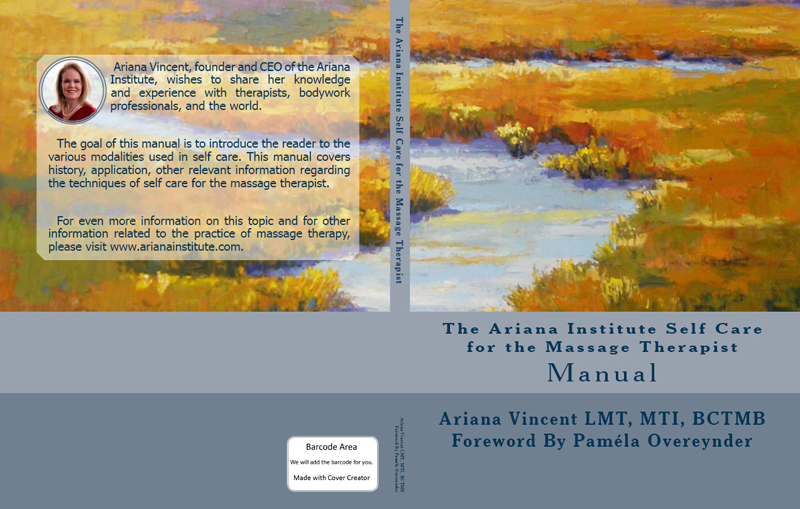
The Ariana Institute’s Self Care for the Massage Therapist Manual is part of a series of massage manuals that are designed to help deepen the knowledge of current massage therapists and introduce new massage therapists to the world of massage and bodywork. The Self Care for the Massage Therapist Manual features topics that are also available as NCBTMB approved online CE courses through the Ariana Institute at www.arianainstitute.com/ce-online/, including:

  • Self Care and Body Mechanics
  • Stretching and Breathing
  • Meditation as a Therapeutic Tool
  • Mindfulness in a Therapeutic Setting

Self Care_BookCoverPreview Continue reading “Meditation”

Posted in Ariana Institute, Ariana Vincent, Body Mechanics, CE Classes, continuing education, Massage Therapy, Meditation as a Therapeutic Tool, Mindfulness in a Therapeutic Setting, Personal Stories, Self Care for Massage Therapists, Stretching and Breathing, Therapy ManualsTagged , , , , , , , , , , ,

Mother and Child: Enveloped By Love

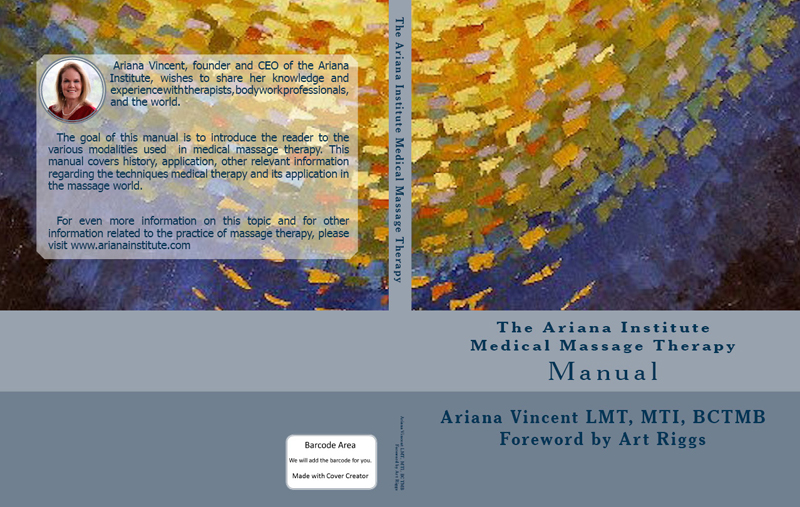
The Ariana Institute’s Medical Massage Therapy Manual is part of a series of massage manuals that are designed to help deepen the knowledge of current massage therapists and introduce new massage therapists to the world of massage and bodywork. The Medical Massage Therapy Manual features topics that are also available as NCBTMB approved online CE courses through the Ariana Institute at www.arianainstitute.com/ce-online/, including:

  • Prenatal Massage
  • Headache and Allergy Relief
  • Lymphatic Massage
  • HIV/AIDS Information for Massage Therapists
  • Pain Management
  • Geriatric Massage

----AI_MEDICAL_BookCoverPreview Continue reading “Mother and Child: Enveloped By Love”

Posted in Ariana Institute, Ariana Vincent, CE Classes, continuing education, Geriatric Massage, Headache and Allergy Relief, HIV/AIDS Information for Massage, Lymphatic Massage, Massage Therapy, Medical Massage, Pain Management, Personal Stories, Prenatal Massage, Therapy ManualsTagged , , , , , , , , , , , , ,

CranioSacral Therapy: A Lighter Touch

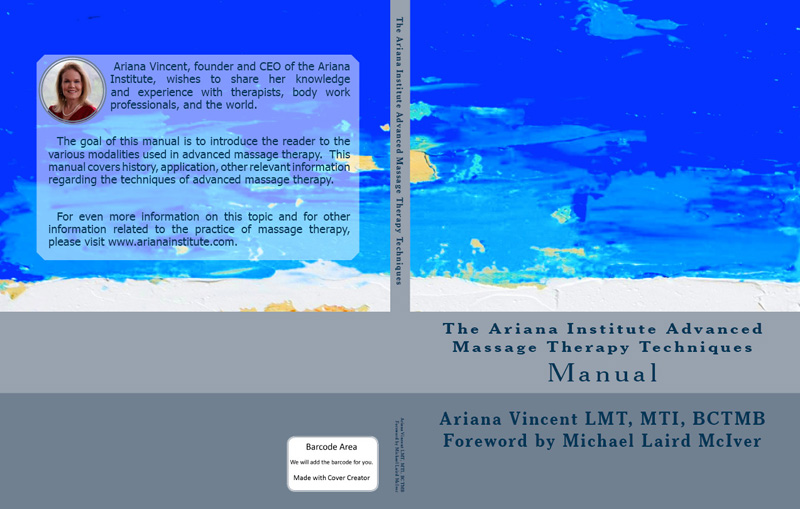
The Ariana Institute’s Advanced Massage Therapy Techniques Manual is part of a series of massage manuals that are designed to help deepen the knowledge of current massage therapists and introduce new massage therapists to the world of massage and bodywork. The Advanced Massage Therapy Techniques Manual features topics that are also available as NCBTMB approved online CE courses through the Ariana Institute at www.arianainstitute.com/ce-online/, including:

  • CranioSacral Therapy
  • Sports Massage
  • Chair Massage
  • Deep Tissue Upper Body
  • Deep Tissue Lower Body
  • Addiction Recovery and Therapeutic Massage

----AI_ADVANCED_BookCoverPreview (1)  Continue reading “CranioSacral Therapy: A Lighter Touch”

Posted in Addiction Recovery, Advanced Massage Techniques, Ariana Institute, Ariana Vincent, CE Classes, Chair Massage, continuing education, CranioSacral Therapy, Deep Tissue, Massage Therapy, Personal Stories, Sports Massage, Therapy ManualsTagged , , , , , , , , , , , ,

Mindfulness

The Ariana Institute’s Self Care for the Massage Therapist Manual is part of a series of massage manuals that are designed to help deepen the knowledge of current massage therapists and introduce new massage therapists to the world of massage and bodywork. The Self Care for the Massage Therapist Manual features topics that are also available as NCBTMB approved online CE courses through the Ariana Institute at www.arianainstitute.com/ce-online/, including:

  • Self Care and Body Mechanics
  • Stretching and Breathing
  • Meditation as a Therapeutic Tool
  • Mindfulness in a Therapeutic Setting

Self Care_BookCoverPreview Continue reading “Mindfulness”

Posted in Ariana Institute, Ariana Vincent, Body Mechanics, CE Classes, continuing education, Massage Therapy, Meditation as a Therapeutic Tool, Mindfulness in a Therapeutic Setting, Personal Stories, Self Care for Massage Therapists, Stretching and Breathing, Therapy ManualsTagged , , , , , , , , , , ,

Soothing the Transition of Life

The Ariana Institute’s Medical Massage Therapy Manual is part of a series of massage manuals that are designed to help deepen the knowledge of current massage therapists and introduce new massage therapists to the world of massage and bodywork. The Medical Massage Therapy Manual features topics that are also available as NCBTMB approved online CE courses through the Ariana Institute at www.arianainstitute.com/ce-online/, including:

  • Headache and Allergy Relief
  • Lymphatic Massage
  • HIV/AIDS Information for Massage Therapists
  • Pain Management
  • Prenatal Massage
  • Geriatric Massage

----AI_MEDICAL_BookCoverPreview Continue reading “Soothing the Transition of Life”

Posted in Ariana Institute, Ariana Vincent, CE Classes, continuing education, Geriatric Massage, Headache and Allergy Relief, HIV/AIDS Information for Massage, Lymphatic Massage, Massage Therapy, Medical Massage, Pain Management, Personal Stories, Prenatal Massage, Therapy ManualsTagged , , , , , , , , , , , , ,

The Importance of Ethics in the Massage Profession

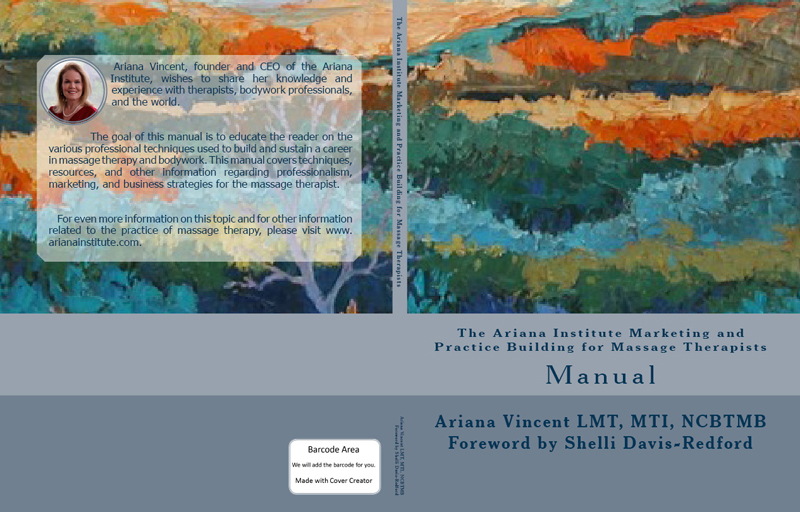
The Ariana Institute’s Marketing and Practice Building for Massage Therapists Manual is part of a series of massage manuals that are designed to help deepen the knowledge of current massage therapists and introduce new massage therapists to the world of massage and bodywork. The Marketing and Practice Building for Massage Therapists Manual features topics that are also available as NCBTMB approved online CE courses through the Ariana Institute at www.arianainstitute.com/ce-online/, including:

  • Ethics
  • Marketing and Practice Building

Marketing_Practice_BuildingBookCoverPreview  Continue reading “The Importance of Ethics in the Massage Profession”

Posted in Ariana Institute, Ariana Vincent, CE Classes, continuing education, Ethics, Marketing, Massage Therapy, Personal Stories, Practice Building, Therapy ManualsTagged , , , , , , , , ,

The Immeasurable Reiki Path

The Ariana Institute’s Mind-Body Therapy Manual is part of a series of massage manuals that are designed to help deepen the knowledge of current massage therapists and introduce new massage therapists to the world of massage and bodywork. The Mind-Body Therapy Manual features topics that are also available as NCBTMB approved online CE courses through the Ariana Institute at www.arianainstitute.com/ce-online/, including:

  • Soothing PTSD and Trauma
  • Reiki Level One
  • Reiki Level Two
  • Reiki Level Three (Master/Teacher Level)

----AI_MIND-BODY_BookCoverPreview Continue reading “The Immeasurable Reiki Path”

Posted in Ariana Institute, Ariana Vincent, CE Classes, continuing education, Massage Therapy, Mind-Body, Personal Stories, Reiki, Therapy ManualsTagged , , , , , , , ,

Aromatic Medicine

The Ariana Institute’s Techniques in the Spa World Manual is part of a series of massage manuals that are designed to help deepen the knowledge of current massage therapists and introduce new massage therapists to the world of massage and bodywork. The Techniques in the Spa World Manual features topics that are also available as NCBTMB approved online CE courses through the Ariana Institute at www.arianainstitute.com/ce-online/, including:

  • Aromatherapy for Massage and Bodywork
  • Ayurvedic Massage
  • Couples Massage
  • Hot and Cold Stone Massage
  • Spa Techniques: Exfoliations and Body Wraps

Techniques in the Spa World_BookCoverPreview_08-19-15 Continue reading “Aromatic Medicine”

Posted in Ariana Institute, Ariana Vincent, Aromatherapy, Ayurvedic Massage, Body Wraps and Exfoliations, CE Classes, Cold Stone, continuing education, Couples Massage, Hot Stone, Massage Therapy, Personal Stories, Spa Techniques, Therapy ManualsTagged , , , , , , , , , , ,

Copyright © 2026 Ariana Institute