PTSD, Trauma, and the Healing Power of Touch

By Ariana Vincent, LMT, MTI, NCBTMB CE Provider

Throughout my career as a massage therapist and educator, I have been deeply influenced by professionals who helped shape my understanding of trauma and healing. Among the most significant are Rick Levinson, LCSW, and Dr. Peter A. Levine, whose work emphasizes the importance of combining somatic therapies with qualified psychological support when addressing trauma and Post-Traumatic Stress Disorder (PTSD).

Their teachings helped me recognize that trauma is not simply a psychological experience—it is also held within the body. Healing often requires both emotional support and physical approaches that help restore a sense of safety, balance, and connection.

When Disaster Strikes

Several years ago, a series of devastating wildfires swept through Central Texas, forever changing the lives of many people in our community. Among those affected were two of my clients.

One client lost her beautiful two-story home, her son’s cottage, and the pottery studio she had lovingly built on her property. Another lost her home, yoga studio, massage practice, and pottery studio. Although both women experienced profound loss, each navigated the grieving process in her own way.

Fortunately, they were surrounded by strong support networks, and I was honored to be included as part of their recovery team.

During this difficult period, I provided massage therapy sessions for both women as they worked to rebuild their lives. While massage could not replace what had been lost, it offered a space where they could regroup, center themselves, and begin restoring a sense of balance.

Creating a Sanctuary for Healing

Massage therapy, regardless of the specific modality, often creates an opportunity for individuals to reconnect with themselves. It can help quiet the nervous system, ease tension, and bring awareness back to the present moment.

For my two clients, whose peaceful and creative lives had been suddenly disrupted by disaster, the treatment room became more than just a place for massage.

They described it as a “sanctuary” and an “oasis” amid the chaos surrounding them.

In a season filled with uncertainty and loss, having a safe space where they could relax and simply be present became an important part of their healing journey.

A Letter I’ll Never Forget

One of the women later sent me a Christmas letter that profoundly touched my heart.

She wrote:

“As the year draws to a close, it is fitting to write you, who helped us recover from the fire, and to assure you that we are at peace and settling into our new life. We are far from finished; everywhere we look we see our next task on this burned-out earth, but life is resiliently returning and there is magical beauty emerging within the dramatic changes that fire has wrought.”

She continued:

“The act of consciously embracing what ‘is,’ no matter how unthinkable, opens up a deep reservoir of faith and strength that provides a surprising lightness of being. Incredibly, we have been blessed every step of the way with help and support from our friends. Right now it is a time to quietly pull inward, allow the tight layers of stress to unwind, and let the creative process complete the healing.”

Her words remain one of the most powerful testimonies to the resilience of the human spirit that I have ever received.

Reading her letter reinforced something I have witnessed countless times throughout my career: healing is rarely about “fixing” what has happened. Rather, it is about creating the conditions that allow people to reconnect with their inner strength and move forward with greater peace and resilience.

Learning Through Service

Many of my clients have been among my greatest teachers. Their courage, vulnerability, and determination continue to inspire me and affirm the path I chose as a massage therapist.

As I deepened my education in trauma-informed care, I also experienced my own personal growth and healing. Understanding trauma from both a professional and human perspective has allowed me to serve others from a more grounded, compassionate place.

This journey ultimately led me to develop the Ariana Institute’s Soothing PTSD and Trauma continuing education course.

Teaching Massage Therapists to Support Trauma Survivors

The goal of the Soothing PTSD and Trauma course is to help massage therapists work more compassionately and effectively with clients who have experienced trauma.

Topics covered include:

  • Establishing trust and safety
  • Effective communication skills
  • Maintaining healthy professional boundaries
  • Finding your personal comfort zone
  • Centering and grounding techniques
  • Self-care for practitioners
  • Honoring the scope of practice
  • Trauma-informed approaches to massage therapy

The course emphasizes that massage therapists are not mental health counselors. Instead, our role is to create a safe, supportive environment where clients can experience comfort, regulation, and a renewed connection with their bodies.

The Importance of Trauma-Informed Touch

PTSD and trauma affect millions of people worldwide. Survivors often experience symptoms such as hypervigilance, anxiety, sleep disturbances, emotional dysregulation, and physical tension held within the body.

When provided appropriately and ethically, massage therapy can help support nervous system regulation, reduce stress, encourage relaxation, and foster a sense of embodiment.

Perhaps most importantly, it offers clients an opportunity to experience safe, nurturing touch and reconnect with the core of themselves that trauma may have obscured.

As massage therapists, we may not be able to erase painful experiences, but we can provide a compassionate environment where healing can begin.

A Shared Commitment to Healing

Exploring trauma and PTSD from a therapeutic perspective has enriched my life and expanded my ability to serve others as both a massage therapist and educator.

To everyone who is interested in supporting trauma survivors—whether as a therapist, healthcare professional, educator, or caring human being—I honor your commitment and appreciate your presence in the healing community.

As Franklin D. Roosevelt wisely stated:

“If civilization is to survive, we must cultivate the science of human relationships—the ability of all peoples, of all kinds, to live together, in the same world at peace.”

By helping survivors of trauma reconnect with balance, safety, and peace within themselves, massage therapists contribute to healing not only individuals but also the communities around them.

I remain deeply grateful to Rick Levinson and Dr. Peter Levine for their guidance and influence, and to every client who has trusted me to accompany them on their healing journey.

As author Clarissa Pinkola Estés beautifully reminds us:

“Ours is not the task of fixing the entire world at once, but of stretching out to mend the part of the world that is within our reach.”

Posted in Mind-Body, NCBTMB, Personal Stories, Soothing PTSD and TraumaTagged , , , ,

Pain Management and Palliative Care: The Healing Power of Compassionate Touch

By Ariana Vincent, LMT, MTI, NCBTMB CE Provider

Five years ago, on Valentine’s Day, I received news that would forever change my understanding of pain management, palliative care, and the profound role therapeutic touch can play during life’s most challenging moments.

I was at the Apple Store when my friend Suzanne shared heartbreaking news about a mutual friend whom I’ll call “Douglas” to protect his privacy. On what should have been a routine birthday checkup, Douglas had been diagnosed with advanced pancreatic cancer.

I was stunned.

Just weeks earlier, he had climbed a 14,000-foot mountain in Colorado with friends from his men’s group. He appeared vibrant, strong, and healthy. The diagnosis seemed impossible. Douglas and his wife, “Victoria,” had been dear friends of mine for more than thirty years, and I immediately felt called to reach out.

Answering the Call

I contacted Victoria to see whether she would be open to a visit. She warmly welcomed me into their home, and later that day I arrived to spend time with them.

Douglas was resting in bed upstairs. I remember he was wearing a jewel-toned purple corduroy shirt that brought color to his pale complexion. Although he remained gracious and present, it was clear he was experiencing significant pain.

Victoria and I sat beside him, offering comfort in simple but meaningful ways. We held his hand, shared pieces of tangerine, encouraged him to stay hydrated, played music he enjoyed, and talked when conversation felt appropriate. At other times, we simply sat together in silence.

After Douglas drifted off to sleep, Victoria and I went downstairs to discuss his care and how I might best support them. She invited me to be part of Douglas’s journey through the dying process.

Members of Douglas’s men’s group had already organized a visitation schedule to ensure he was never alone and that Victoria had ongoing support. Inspired by their dedication, I cleared my schedule and made myself available whenever they needed me.

It was then that I began offering palliative care to one of the most remarkable individuals I have ever known while simultaneously supporting his devoted wife.

Understanding Palliative Care

Palliative care focuses on relieving suffering and improving quality of life for individuals facing serious illness. Whether an illness is curable, chronic, or life-threatening, palliative care addresses physical discomfort while also providing emotional, psychological, and spiritual support.

In Douglas’s case, we knew the cancer had progressed beyond the possibility of recovery. My role became centered on comfort, pain management, and compassionate presence.

I was deeply grateful for the advanced training I had received over the years, including studies in Compassionate Touch, Therapeutic Touch, Reiki, and Oncology Massage. Those specialized skills provided invaluable tools that allowed me to support Douglas during this sacred chapter of his life.

Creating a Professional Treatment Plan

Although Douglas was a close friend, I approached his care with the same professionalism I would offer any client.

I completed a thorough assessment, documented his condition, and obtained approval from his physicians to provide palliative massage and pain management therapies. With Victoria’s support, I developed a treatment plan tailored to Douglas’s changing needs.

Because pancreatic cancer can create significant pain and sensitivity, especially in the abdominal and lower back regions, I carefully avoided areas that could increase discomfort. Instead, I incorporated gentle modalities such as:

  • Reiki
  • Therapeutic Touch
  • Reflexology
  • Myofascial techniques
  • Aromatherapy
  • Hand and foot massage
  • Face and scalp massage
  • Oncology massage

Recognizing the complexity of Douglas’s condition, I also invited a trusted colleague with extensive training in oncology massage to join the care team. Together, we sought to provide the highest level of comfort possible.

The Importance of Presence

As Douglas’s condition progressed, the tumor continued to grow, increasing his pain levels and limiting the therapies that could be safely performed.

At this stage, much of my work shifted toward non-contact or low-contact approaches, including Reiki and Therapeutic Touch. These gentle modalities offered comfort without placing additional strain on his body.

Equally important was simply being present.

Family members, friends, and community members gathered around Douglas and Victoria, forming a circle of support filled with love, compassion, and respect. We balanced visits with quiet periods that allowed him to rest peacefully.

Victoria often expressed gratitude for the outpouring of support. Being part of that loving community remains one of the greatest honors of my life.

Hospice Care and a Sacred Goodbye

Eventually, Douglas entered hospice care.

The support network continued. Friends traveled from near and far to spend time with him and to comfort Victoria. My role remained focused on compassionate touch, pain management, and emotional support.

One evening, while a friend and I sat quietly by Douglas’s bedside at the hospice center, he peacefully took his final breath.

I was holding his hand when he passed.

It was one of the most tender and sacred moments I have ever witnessed.

Lessons from a Life Well Lived

At Douglas’s memorial service, Victoria released two white doves into the vast Texas sky. As they soared upward, there was hardly a dry eye in attendance.

The experience of supporting Douglas and Victoria through the dying process transformed me both personally and professionally. It reinforced my belief that massage therapy extends far beyond physical techniques. At its heart, it is about presence, compassion, connection, and the ability to ease suffering.

When I first began studying massage therapy years ago, I never imagined that the knowledge I gained would one day allow me to serve dear friends during one of life’s most profound transitions.

Yet that is precisely what happened.

The experience reminded me that therapeutic touch is not always about fixing or curing. Sometimes, the greatest gift we can offer is comfort, dignity, peace, and the reassurance that no one has to walk their journey alone.

For that lesson—and for the opportunity to accompany Douglas and Victoria during such a meaningful chapter of their lives—I will always be grateful.

Posted in CE Classes, continuing education, Pain Management, Personal StoriesTagged , , , ,

CranioSacral Therapy: A Gentle Path to Healing

What Is CranioSacral Therapy?

CranioSacral Therapy (CST) is a gentle, non-invasive, hands-on therapy that supports the body’s natural ability to heal itself. Using a very light touch, typically no more than the weight of a nickel. Practitioners work with the craniosacral system: the skull, spine, sacrum, membranes, fascia, and the cerebrospinal fluid that surrounds and protects the brain and spinal cord.

Unlike more forceful manual therapies, CST works with the body’s own rhythms rather than imposing external forces. The goal is to release restrictions, improve fluid flow, calm the nervous system, and restore balance throughout the body: physically, emotionally, and energetically.

A Brief History

Although modern CranioSacral Therapy was formalized in the 20th century, its philosophical roots trace back thousands of years to ancient healing traditions that recognized the importance of subtle body movement, fluid dynamics, and energy flow in maintaining health.

The foundation of modern CST was laid by Dr. William Sutherland, an osteopathic physician working in the early 1900s. Challenging the prevailing belief of his time, Dr. Sutherland discovered that the bones of the skull are not fused and immobile in adulthood; they retain a slight, rhythmic mobility throughout life. He called this movement the “Primary Respiratory Mechanism” and spent decades developing techniques to work with it therapeutically.

In the 1970s and 1980s, Dr. John Upledger, an osteopathic physician and clinical researcher, expanded significantly on Sutherland’s work. Through rigorous scientific observation and clinical trials at Michigan State University, Dr. Upledger identified and measured the craniosacral rhythm as a distinct physiological system. He went on to found the Upledger Institute, which helped bring CranioSacral Therapy into mainstream integrative and holistic healthcare and has trained tens of thousands of practitioners worldwide.

How It Works

The body is constantly adapting to stress, from physical injuries and surgeries to emotional trauma, chronic tension, and the ordinary demands of daily life. Over time, these stresses can create restrictions and imbalances in the craniosacral system, disrupting the natural flow of cerebrospinal fluid and the function of the central nervous system.

During a CST session, the client typically lies fully clothed on a massage table in a quiet, relaxed environment. The practitioner uses a very light, still touch at key points along the head, spine, and sacrum to gently monitor the body’s cranial rhythm — a subtle, wave-like motion that pulses at roughly 6–12 cycles per minute. By sensing where the rhythm feels restricted, reduced, or asymmetrical, the practitioner can identify areas of tension or dysfunction.

Through gentle, precise holds and subtle movements, the practitioner helps the body release those restrictions. This allows the nervous system to shift from a state of stress (sympathetic “fight or flight”) into a deeper state of rest and recovery (parasympathetic “rest and digest”). Sessions typically last 45–60 minutes.

This process can support:

  • Better nervous system function and regulation
  • Improved circulation and cerebrospinal fluid flow
  • Reduced pain, tension, and inflammation
  • Deeper relaxation and stress relief
  • Emotional release and body-mind integration
  • Enhanced immune system function

Common Conditions CST May Help

Because the craniosacral system influences the entire body, CST is often used to support:

  • Migraines and headaches
  • Neck and back pain
  • TMJ dysfunction
  • Stress and anxiety
  • Chronic fatigue
  • PTSD and emotional trauma
  • Sleep disturbances

A Gentle Approach for All Ages

One of the most distinctive aspects of CranioSacral Therapy is its universality. Because the touch used is so light and non-invasive, CST is appropriate for people across the entire lifespan — from newborns and young children to adults recovering from injury or surgery to elderly individuals managing chronic conditions.

For infants, CST is increasingly used to address the physical stresses of birth — particularly after long labors, forceps or vacuum-assisted deliveries, or C-sections, which can create cranial and spinal restrictions that contribute to colic, nursing difficulties, or developmental delays.

For adults and seniors, CST offers a way to address accumulated physical and emotional tension that may not respond well to more aggressive therapies. It is particularly valued by those who need a gentle, whole-body approach due to fragility, pain sensitivity, or complex health histories.

Final Thoughts

CranioSacral Therapy offers a calming, holistic approach to healing that works with the body rather than against it. By supporting the body’s innate intelligence and self-corrective abilities, CST can help promote greater comfort, balance, and overall well-being.

Posted in CranioSacral Therapy, Massage Educators, Massage Therapy, NCBTMBTagged , , , ,

Mother and Child: Enveloped By Love

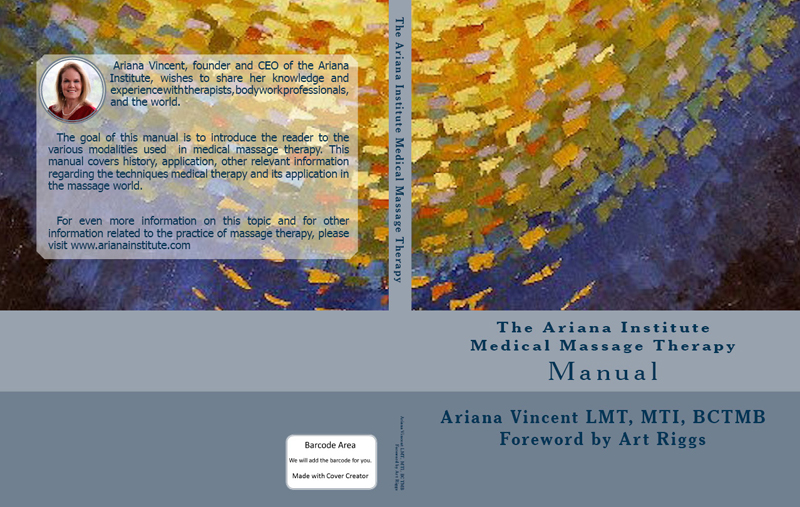
The Ariana Institute’s Medical Massage Therapy Manual is part of a series of massage manuals that are designed to help deepen the knowledge of current massage therapists and introduce new massage therapists to the world of massage and bodywork. The Medical Massage Therapy Manual features topics that are also available as NCBTMB approved online CE courses through the Ariana Institute at www.arianainstitute.com/ce-online/, including:

  • Prenatal Massage
  • Headache and Allergy Relief
  • Lymphatic Massage
  • HIV/AIDS Information for Massage Therapists
  • Pain Management
  • Geriatric Massage

----AI_MEDICAL_BookCoverPreview Continue reading “Mother and Child: Enveloped By Love”

Posted in Ariana Institute, Ariana Vincent, CE Classes, continuing education, Geriatric Massage, Headache and Allergy Relief, HIV/AIDS Information for Massage, Lymphatic Massage, Massage Therapy, Medical Massage, Pain Management, Personal Stories, Prenatal Massage, Therapy ManualsTagged , , , , , , , , , , , , ,

Soothing the Transition of Life

The Ariana Institute’s Medical Massage Therapy Manual is part of a series of massage manuals that are designed to help deepen the knowledge of current massage therapists and introduce new massage therapists to the world of massage and bodywork. The Medical Massage Therapy Manual features topics that are also available as NCBTMB approved online CE courses through the Ariana Institute at www.arianainstitute.com/ce-online/, including:

  • Headache and Allergy Relief
  • Lymphatic Massage
  • HIV/AIDS Information for Massage Therapists
  • Pain Management
  • Prenatal Massage
  • Geriatric Massage

----AI_MEDICAL_BookCoverPreview Continue reading “Soothing the Transition of Life”

Posted in Ariana Institute, Ariana Vincent, CE Classes, continuing education, Geriatric Massage, Headache and Allergy Relief, HIV/AIDS Information for Massage, Lymphatic Massage, Massage Therapy, Medical Massage, Pain Management, Personal Stories, Prenatal Massage, Therapy ManualsTagged , , , , , , , , , , , , ,

A Multi–Modality Approach to Headache and Allergy Relief

The Ariana Institute’s Medical Massage Therapy Manual is part of a series of massage manuals that are designed to help deepen the knowledge of current massage therapists and introduce new massage therapists to the world of massage and bodywork. The Medical Massage Therapy Manual features topics that are also available as NCBTMB approved online CE courses through the Ariana Institute at www.arianainstitute.com/ce-online/, including:

  • Headache and Allergy Relief
  • Lymphatic Massage
  • HIV/AIDS Information for Massage Therapists
  • Pain Management
  • Prenatal Massage
  • Geriatric Massage

  Continue reading “A Multi–Modality Approach to Headache and Allergy Relief”

Posted in Ariana Institute, Ariana Vincent, CE Classes, continuing education, Geriatric Massage, Headache and Allergy Relief, HIV/AIDS Information for Massage, Lymphatic Massage, Massage Therapy, Medical Massage, Pain Management, Personal Stories, Prenatal Massage, Therapy ManualsTagged , , , , , , , , , , , , ,

Pain Management and Palliative Care

The Ariana Institute’s Medical Massage Therapy Manual is part of a series of massage manuals that are designed to help deepen the knowledge of current massage therapists and introduce new massage therapists to the world of massage and bodywork. The Medical Massage Therapy Manual features topics that are also available as NCBTMB approved online CE courses through the Ariana Institute at www.arianainstitute.com/ce-online/, including:

  • Pain Management
  • Headache and Allergy Relief
  • Lymphatic Massage
  • HIV/AIDS Information for Massage Therapists
  • Prenatal Massage
  • Geriatric Massage

----AI_MEDICAL_BookCoverPreview Continue reading “Pain Management and Palliative Care”

Posted in Ariana Institute, Ariana Vincent, CE Classes, continuing education, Geriatric Massage, Headache and Allergy Relief, HIV/AIDS Information for Massage, Lymphatic Massage, Massage Therapy, Medical Massage, Pain Management, Personal Stories, Prenatal Massage, Therapy ManualsTagged , , , , , , , , , , , , ,

Massage for the Golden Years

The Ariana Institute’s Medical Massage Therapy Manual is part of a series of massage manuals that are designed to help deepen the knowledge of current massage therapists and introduce new massage therapists to the world of massage and bodywork.  The Medical Massage Therapy Manual features topics that are also available as NCBTMB approved online CE courses through the Ariana Institute at www.arianainstitute.com/ce-online/, including:

  • Geriatric Massage
  • Headache and Allergy Relief
  • Lymphatic Massage
  • HIV/AIDS Information for Massage Therapists
  • Pain Management
  • Prenatal Massage


Continue reading “Massage for the Golden Years”

Posted in Ariana Institute, Ariana Vincent, CE Classes, continuing education, Geriatric Massage, Headache and Allergy Relief, HIV/AIDS Information for Massage, Lymphatic Massage, Massage Therapy, Medical Massage, Pain Management, Personal Stories, Therapy Manuals, UncategorizedTagged , , , , , , , , , , , , ,

Compassion in Action: Massage for Individuals with HIV or AIDS

The Ariana Institute’s Medical Massage Therapy Manual is part of a series of massage manuals that are designed to help deepen the knowledge of current massage therapists and introduce new massage therapists to the world of massage and bodywork.  The Medical Massage Therapy Manual features topics that are also available as NCBTMB approved online CE courses through the Ariana Institute at www.arianainstitute.com/ce-online/, including:

  • HIV/AIDS Information for Massage Therapists
  • Headache and Allergy Relief
  • Lymphatic Massage
  • Pain Management
  • Prenatal Massage
  • Geriatric Massage

----AI_MEDICAL_BookCoverPreview  Continue reading “Compassion in Action: Massage for Individuals with HIV or AIDS”

Posted in Ariana Institute, Ariana Vincent, CE Classes, continuing education, Geriatric Massage, Headache and Allergy Relief, HIV/AIDS Information for Massage, Lymphatic Massage, Massage Therapy, Medical Massage, Pain Management, Personal Stories, Prenatal Massage, Therapy ManualsTagged , , , , , , , , , , , , ,

The Touch of Lymphatic Massage

The Ariana Institute’s Medical Massage Therapy Manual is part of a series of massage manuals that are designed to help deepen the knowledge of current massage therapists and introduce new massage therapists to the world of massage and bodywork.  The Medical Massage Therapy Manual features topics that are also available as NCBTMB approved online CE courses through the Ariana Institute at www.arianainstitute.com/ce-online/, including:

  • Headache and Allergy Relief
  • Lymphatic Massage
  • HIV/AIDS Information for Massage Therapists
  • Pain Management
  • Prenatal Massage
  • Geriatric Massage

----AI_MEDICAL_BookCoverPreview Continue reading “The Touch of Lymphatic Massage”

Posted in Ariana Institute, Ariana Vincent, CE Classes, continuing education, Geriatric Massage, Headache and Allergy Relief, HIV/AIDS Information for Massage, Lymphatic Massage, Massage Therapy, Medical Massage, Pain Management, Personal Stories, Prenatal Massage, Therapy ManualsTagged , , , , , , , , , , , , ,

Copyright © 2026 Ariana Institute