Creating a Strong Business Plan for a Massage Therapy Educator

By Ariana Vincent, LMT, MTI, NCBTMB CE Provider

A well-developed business plan is more than a document—it is a roadmap that guides your professional direction, helps you stay financially stable, and positions your massage therapy education business for long-term success. Whether you are launching a new training program or refining an existing one, your business plan should reflect clarity, purpose, and adaptability in an evolving marketplace.

In the field of massage therapy education, organizations such as the American Massage Therapy Association and the Associated Bodywork & Massage Professionals emphasize the importance of professional standards, ethical practice, and continued business development—principles that should be woven into every business plan.

Understanding the Purpose of a Business Plan

A business plan outlines how your massage therapy education business will operate, grow, and remain profitable in a competitive environment. It is both a strategic tool and a reflective process. At its core, it answers three essential questions:

  • Where is your business going?
  • How will it get there?
  • How will you measure success?

For massage therapy educators, this includes understanding student needs, market demand, pricing structures, and the evolving requirements of continuing education providers.

Personal Foundation: Knowing Yourself as an Educator

Before focusing on logistics, a strong business plan begins with self-assessment. As a massage therapy educator, your personal strengths, experiences, and teaching philosophy shape your business identity.

This section should include:

  • Your strengths, skills, and teaching style
  • Your values in relation to the massage profession
  • Your clinical and educational experience
  • What you enjoy most about teaching and mentoring students
  • Areas for professional growth or improvement
  • Unique qualities that distinguish your teaching approach

Honest reflection helps ensure your business is aligned with your long-term professional purpose rather than just market demand.

Defining Your Business: Mission, Vision, and Offerings

A clear mission and vision provide direction and consistency.

Your mission statement defines your purpose as an educator—why your program exists and what impact it intends to make on students and the profession. Your vision statement describes the future you are working toward, including your long-term goals for influence, reach, and contribution.

From there, define your educational offerings:

  • Continuing education workshops
  • Specialty massage techniques
  • Ethics and professionalism training
  • Business development courses for therapists
  • Hands-on clinical skill enhancement

It is also important to explain why students would choose your program. This may include teaching style, hands-on training, flexible scheduling, or specialized expertise.

Flexibility should also be built into your model. Strong educators adapt to evolving student needs, licensing requirements, and industry standards.

Operating Procedures: Structure and Consistency

Operational clarity ensures your program runs smoothly. This includes:

  • Required licenses and certifications
  • Program launch timeline
  • Class schedules and frequency
  • Enrollment procedures
  • Attendance policies
  • Cancellation and refund policies
  • Technology and classroom rules (including phone usage)

Professional associations like the American Massage Therapy Association often provide guidance on maintaining ethical and operational standards in educational environments.

Consistency in operations builds trust with students and strengthens your reputation.

Management and Personnel: Building Your Support System

Even solo educators benefit from a clear organizational structure. Your business plan should outline:

  • Legal structure (sole proprietorship, LLC, etc.)
  • Your teaching and leadership experience
  • Administrative roles and responsibilities
  • Whether you will operate alone or with a team
  • Support roles such as bookkeeping, IT, marketing, or classroom assistance

If you plan to hire staff or contractors, include:

  • Job roles and responsibilities
  • Compensation structure
  • Expected qualifications

Even small training programs often rely on external support services such as cleaning, scheduling assistance, or accounting support. Identifying these needs early helps prevent operational gaps.

Insurance and Risk Management

Insurance is a critical part of protecting your business and professional reputation. Common coverage types include:

  • Professional liability insurance
  • General business liability
  • Property and equipment insurance
  • Health, disability, and life insurance (personal protection)

Consulting with an insurance agent helps determine the appropriate level of coverage based on your class size, location, and teaching methods.

Marketing and Competition: Understanding Your Market

Marketing begins with identifying your target audience. For massage therapy education, this may include:

  • Licensed massage therapists seeking continuing education
  • Massage therapy students completing core curriculum requirements
  • Wellness professionals expanding skill sets
  • Spa employees required to maintain certifications

Understanding the local and national landscape is essential. Research competitors by examining:

  • Course offerings
  • Pricing structures
  • Teaching styles
  • Reputation and student feedback

You should also define your brand identity—how you want your program to be perceived. Ideally, students should associate your business with quality instruction, professionalism, and meaningful learning outcomes.

A key part of your strategy is pricing. Your fee schedule should reflect:

  • Market standards
  • Operational costs
  • Instructor time and expertise
  • Profitability goals

Organizations such as the Associated Bodywork & Massage Professionals provide industry insights that can help guide competitive pricing and business development.

Advertising, Promotion, and Location Strategy

Marketing your educational program requires a multi-channel approach:

  • Social media marketing
  • Professional networking
  • Referral systems
  • Workshops and demonstrations
  • Email newsletters

It is also important to track marketing performance to determine return on investment. This may include monitoring enrollment sources, engagement rates, and conversion from ads or promotions.

Your physical or virtual location should support accessibility and comfort. Consider:

  • Classroom space requirements
  • Parking and accessibility
  • Safety and lighting
  • Reception and administrative space
  • Technology needs for hybrid or online learning

The geographic region you serve should have enough demand to support consistent enrollment, whether local, regional, or national.

Financial Projections: Planning for Sustainability

Financial planning ensures your educational business is sustainable. Your plan should include:

  • Start-up capital and available funds
  • Equipment and supply costs
  • Monthly operational expenses
  • Revenue projections
  • Break-even analysis
  • Cash flow expectations

If financing is required, include:

  • Loan sources (banks or credit unions)
  • Amount requested
  • Repayment plan
  • Purpose of funding

You should also identify long-term growth opportunities such as expanding course offerings, developing online programs, or hosting advanced certification workshops.

Helpful planning resources such as Massage Practice Builder and professional associations like AMTA offer tools for developing realistic financial forecasts.

You can also explore additional guidance here:
Writing a Massage Business Plan – AMTA Resource
Massage Business Plan Guide – Massage Practice Builder
Massage Business Planning Article – ABMP

Final Thoughts

A business plan for a massage therapy educator is not a static document—it is a living strategy that evolves as your business grows. When thoughtfully developed, it becomes a powerful tool for decision-making, financial stability, and professional fulfillment.

By combining personal clarity, structured operations, strategic marketing, and realistic financial planning, you create a strong foundation for a successful and impactful educational practice in the massage therapy profession.

Posted in Ariana Institute, Ariana Vincent, Massage Educators, Massage Therapy, Massage Therapy InstructorTagged , , ,

Meditation: Finding Peace Within

By Ariana Vincent

Meditation has been one of the greatest gifts in my life. It has given me the opportunity to turn inward, rejuvenate deeply, gain valuable insights, and cultivate a stronger connection with myself and those around me. Through meditation, I have found greater well-being, inner peace, and a deeper appreciation for life’s journey.

My introduction to meditation came through music. While I was in college, a musician friend invited me to attend a meditation gathering where he was performing. The group followed the teachings of Hazrat Inayat Khan, a renowned spiritual teacher from India, while also drawing wisdom from Buddhism, Christianity, Judaism, Native American traditions, Hinduism, and many other faiths.

From the moment I attended, I felt drawn to the warmth and inclusiveness of the community. We honored the world’s religions by lighting candles and reading passages from their sacred texts. Having grown up in a small Methodist church in San Antonio, this experience was a profound awakening. I loved exploring the teachings of diverse spiritual traditions, but I was equally inspired by the meditation practices themselves—the breathing exercises, sacred dance, retreats, focus on sound, and the strong sense of community.

At a time when I had recently graduated from college and was searching for my path in the world, meditation became a calming and restorative presence in my life. While I eventually moved on from the group and the relationship that first introduced me to it, many of the friendships I formed there remain some of my most treasured lifelong connections.

Years later, my studies in transpersonal counseling at John F. Kennedy University in California further deepened my connection to meditation. Several courses introduced me to a more comprehensive understanding of the profound effects meditation can have on the body, mind, and spirit. This academic exploration strengthened what I had already begun to experience firsthand.

As life evolved and many of the meditation groups I once attended became less active, I sought new ways to nurture my practice. More recently, I attended Ecstatic Chant workshops at the Omega Institute in New York, where spiritual teachers and seekers gathered to chant, sing, and share fellowship. These experiences were deeply moving and transformative, reminding me of the power of collective intention and spiritual connection.

Although meditation is often practiced alone, there is something uniquely powerful about gathering with others who value contemplation, reflection, and inner peace. The collective energy that emerges when people meditate or pray together can be both profound and healing. While meditation may not be for everyone, I deeply respect whatever practices help individuals find stillness, balance, and restoration in their lives.

Meditation has also been invaluable in my professional life as a massage therapist and educator. Incorporating meditative practices into both my personal and professional routines has helped transform moments of stress and uncertainty into opportunities for calm and clarity. Whether I am meeting a client facing serious health challenges or preparing to teach a complex subject to a room full of students, meditation helps me remain centered, present, and grounded.

I consider meditation to be one of the most effective forms of self-care. During my practice, I often hold my clients, students, and colleagues in my thoughts, envisioning them surrounded by peace, healing, and loving energy. Meditation not only helps us cultivate inner harmony but also contributes to the collective well-being of humanity.

As Hazrat Inayat Khan beautifully expressed, “Peace comes when self is in harmony with the rhythm of the heart.” Through meditation, I have discovered that rhythm, and it continues to guide me toward greater peace, compassion, and connection every day.

Posted in Ariana Institute, Ariana Vincent, Meditation as a Therapeutic Tool, NCBTMBTagged , , , , ,

BECOMING A CE PROVIDER IN TEXAS

A quick note and distinction between an MTI and a CE provider. The CE Provider authorizes a person to issue the CE certificate and teach acceptable subjects that they are qualified to teach per the rules (e.g., a CPA could hold the CE Provider and teach business for MTs). The MTI authorizes an MT to teach massage therapy technique – at a school, by teaching massage and supervising internship or teaching CE on massage technique for the school; or as CE on massage technique independent of a school if he/she also holds the CE Provider license.

Texas’s TDLR CE provider instructions

Instructor Requirements

• Massage therapy techniques and courses involving the manipulation of soft tissue must be taught or presented by a licensed massage therapy instructor.

• Advanced massage therapy or bodywork techniques must be taught or presented by persons with licensure, registration or education in the technique being presented.

• Courses, other than techniques, may be taught or presented by persons with licensure, registration, education or practical experience in the subject being presented.

Curriculum Requirements

Acceptable Course Curriculum

Acceptable continuing education includes attendance and completion of courses that are directly related to the theory or clinical application of theory pertaining to the following:

• Practice of massage therapy

• The manipulation of soft tissue

• Massage therapy laws and rules

• Business practices

• Professional ethics

• Anatomy

• Physiology

• Hydrotherapy

• Kinesiology

• Pathology

• Health and hygiene

Courses must be designed to increase and enhance professional knowledge, skills or competence and be provided by a TDLR-approved provider or one of these recognized continuing education providers:

• Institutes

• Seminars

• Workshops

• State or national conferences

• Advanced coursework

• College and university academic courses

Bodywork Classes

Most massage and bodywork modalities are acceptable, provided the sponsor is acceptable. Unacceptable modalities would include activities which are not part of providing a massage (e.g. ear candling) or that require another license (e.g. chiropractic adjustments).

Energy Work Classes

Most energy work classes are acceptable, provided the sponsor is acceptable. They must be designed to enhance the provision of massage, and they may not involve any false or misleading health claims (e.g., claiming to cure or treat diseases).

Exercise or Movement Classes

Yoga, martial arts, and exercise classes are not acceptable unless they are specifically designed as self-care for massage therapists.

First Aid or CPR

Courses in first aid and/or CPR will be accepted if the course is taught or presented by a certified First Aid Instructor or certified CPR instructor who was certified by the American Heart Association, American Red Cross or National Safety Council. Courses cannot exceed six hours total each renewal period.

Unacceptable Course Curriculum

The department shall not give continuing education credit for the following:

• Education incidental to the regular professional activities of a massage therapist, such as learning occurring from experience or research

• Professional organizational activity, such as serving on committees or councils or as an officer in a professional organization

• College academic courses which are audited or not taken for credit

• Independent study, except online or correspondence courses in accordance with the acceptable continuing education requirements of this subchapter

• Any experience that does not comply with the approved continuing education in §117.31 of the Massage Therapy Administrative Rules.

Pre-Approval of Course Curriculum

The department does not pre-approve CE programs. Please consult the Acceptable Course Curriculum section and the Massage Therapy Administrative Rules to determine whether or not the program is acceptable. If the sponsor, content, and certificate are acceptable, you may use that program for continuing education toward license renewal.

All licensed massage therapy schools are also approved to provide continuing education and may issue either continuing education certificates or transcripts showing advanced course work (as described in the rules, §117.60. Massage School Advanced Course Work). 

Student Attendance Records

Approved providers are required to maintain attendance records of all continuing education activities for a period of 5 years.

An approved provider must also issue a certificate of attendance to each participant in a course program. The certificate of attendance shall contain:

1. The name of the approved provider and approval number

2. The name of the participant

3. The title of the program

4. The number of credit hours given

5. The subject(s) included in the program

6. The date and place of the program

7. The signature of the approved provider

The department may audit approved providers for compliance with the Massage Therapy Administrative Rules.

Renewal of Approval

Continuing education providers will receive a renewal notice via email and regular mail at their address of record prior to their approval expiration date. Providers must return the renewal notice along with the designated fee before the approval expiration date.

Provider renewals postmarked after the expiration date will not be able to renew and will be required to submit a new application for CE provider approval.

If you do not receive a renewal notice, please contact TDLR at https://ga.tdlr.texas.gov:1443/form/csgeneralinquiry.

Posted in Ariana Institute, Ariana Vincent, CE Classes, Massage Educators, Massage Therapy InstructorTagged , ,

Exploring the Path of a Massage Therapy Instructor


Choosing Your Path

There are myriad ways you can configure your career as an MTI. You can work part-time or full-time, you can use your experiences as an MTI as a stepping-stone to another career, you can focus on being an MTI as a second career, you can blend teaching with your current vibrant massage therapy practice, or you can supplement your retirement income by becoming an MTI. There are opportunities to work as an independent massage therapy instructor like I do, you can work as an instructor at an established massage therapy school, and/or you can work for a nationwide company that provides massage therapy classes throughout the U.S.

Once you have been approved as an MTI and you have your MTI license and any other licenses and certifications you may need in order to teach, focus on setting goals for each of the massage therapy courses you wish to teach. Then choose the content and format that will make each course work for you and your students. If you choose a career as an independent MTI, you can utilize the information you gain in your MTI course to begin designing the content of your course notebook and structure. Remember to avoid using other people’s copyrighted material without permission and acknowledgment. If you choose to work as an MTI in a massage school environment, the school administrators will typically provide course notebooks and supporting media for the classroom. You should also think about how you will use technology in the classroom. Practice teaching your newly designed massage course to colleagues and friends and ask for feedback. It is not only an excellent idea to practice teaching, but it is also an NCBTMB requirement, as stated on their website, “Before submitting an application to NCBTMB for approval, you must have taught the course at least one time within the last year to a group of five or more participants. You must provide the participants with an evaluation requesting feedback on the course, instruction and material.” You could even videotape yourself practice teaching so you can study the pros and cons of your teaching style. An additional way to learn to teach would be to partner with another instructor during the beginning of your career or to serve as an assistant in a classroom.

Teach what you truly love and what you are qualified to teach. Think about how good it feels to have a positive influence in the lives of those around you. Create a structure for your classes in an environment that participants will enjoy. Utilize the information and resources presented in your MTI course material to create the ideal classroom environment. Make sure the classroom is well lit, properly ventilated, clean, comfortable, and that there are appropriate restroom facilities. Decide whether or not you are going to provide massage tables. Make sure to have a balanced percentage of hands-on experiential training and cognitive information. My preferred balance is 80% experiential and 20% cognitive.

Once you have developed your course material, if you are an independent MTI,, focus on setting prices, registering participants, and preparing rosters and certificates of attendance. Set up a spreadsheet to track your income and expenses on a daily basis so you can carefully monitor your progress. It is also important to remember that the first three to five years of any business, including massage therapy education, are building years as you lay the foundation for your ongoing success. Keep the appropriate tax records for the IRS. Also maintain  student records, rosters and course evaluations for NCBTMB and your state massage board. Please be sure to comply with all of your state board rules and regulations.

Develop marketing strategies by taking some marketing classes, reading books that offer tips for successful marketing and utilizing the services of mentors and consultants. The Ariana Institute’s MTI course includes information on marketing your courses as an independent MTI; however, not all MTI courses provide this component in their curriculum. Next, determine what marketing techniques work best for your business and budget. Think of ways to develop compelling descriptive titles for your courses to capture the attention of your students. Believe that you can be successful and surround yourself with competent people who support you in achieving your goals and dreams.

We will next explore ways of finding and creating opportunities to advance your career as an MTI.

Opportunities For Massage Instructors

Search engines come in handy for researching opportunities for massage therapy instructors. If you want to work at a massage school, simply search the name of the city where you want to teach and then enter “massage school” and find out the name of the director of the school and contact that person to see if there are any positions available for MTIs. You could also offer to teach one-time continuing education classes in your area of specialty as well as seeing about becoming a part of the part-time or full-time faculty. Create a proposal for the CE classes you want to teach at the schools and submit it to the school administrators along with your resume and cover letter. Go to events and CE classes at the schools where you are interested in teaching so that you become known in their environment.

If you are interested in teaching for a national massage company that hires instructors, you could do some online research for names and contact information and then follow-up to see if they are hiring.  You could take some courses offered by that company and talk to the instructor to see what his or her teaching experiences with that company have been like.

Another approach to utilizing your MTI certification would be to establish yourself as an independent MTI and CE provider. Design and develop your own course curriculum and market your class to the local community. Once you have achieved your desired level of success, consider expanding your market.

You can develop name recognition by offering to teach classes for local massage groups, such as massage Meetups and local AMTA chapters. On a larger scale, you can submit proposals for state and national conventions, for example, AMTA national conventions and The World Massage Festival.

Consider writing a book on the massage technique that you want to teach. This can help you market yourself as an educator. This can be done for every course, or bundle of courses that you offer.

In today’s technological world, another good marketing avenue is to create instructional videos for your courses and (1) publish them on the web, (2) send them to prospective students, (3) place them on your website, (4) include the URLs for these videos in the books that you publish, and (5) include the URLs in your course notebooks.

Resources for Advanced Information

The Ariana Institute’s Massage Therapy Instructor Course

https://arianainstitute.com/ce-online/#mti

ABMP Instructor Resource Programs

http://www.abmp.com/instructors/ http://www.abmp.com/instructors/instructor_development.php

AFMTE’s Educational Resources for Massage Therapy Teachers

http://www.afmte.org/teacher-education-resources/

AFMTE’s National Teacher Education Standards Project (NTESP)

http://www.afmte.org/education/tesp-core-competencies/

Coursera Instructional Methods in Health Professions Education

https://www.coursera.org/course/instructmethodshpe

Educational Training Solutions

http://www.educationtrainingsolutions.com/about-us/

ELAP (Entry-Level Analysis Project)

http://www.elapmassage.org/

Florida Board of Massage Therapy Education Programs Page

http://floridasmassagetherapy.gov/education-and-training-programs/

NCBTMB Information for Continuing Education Providers

http://www.ncbtmb.org/continuing-education-providers/continuing-education-providers#general

NCBTMB New York Approved CE Sponsor

http://www.ncbtmb.org/continuing-education-providers/ncbtmb-approved-new-york-ce-sponsor

Now that we have explored many options on the MTI path, I’ll leave you with a few thoughts and insights. One of the most important things you can do is to impart the knowledge and wisdom that you have gained over the years. Teaching can be a rewarding and enriching process that benefits the teacher, the student and the recipients of massage. Take time to look inside and see what you can do to let your light shine and manifest your dreams into reality. As Nelson Mandela shared so eloquently, What counts in life is not the mere fact that we have lived. It is what difference we have made to the lives of others that will determine the significance of the life we lead.

The information above includes excerpts for the article “Positive Influence: Become a Massage Therapy Instructor,” by Ariana Vincent, originally published in the June 2015 issue of MASSAGE Magazine.

Visit the Ariana Institute’s website to learn about opportunities and courses for future Massage Therapy Instructors at https://arianainstitute.com/ce-online/#mti!
fb2fb4

Posted in Advanced Massage Techniques, Ariana Institute, Ariana Vincent, CE Classes, continuing education, Massage Educators, Massage Therapy, Massage Therapy Instructor, Medical Massage, Mind-Body, NCBTMB, Practice Building, Self Care for Massage Therapists, Spa Techniques

Healing with Aromatherapy Massage

What Is Aromatherapy?

Aromatherapy is the art and science of utilizing naturally extracted aromatic essences to balance, harmonize, and promote the health of body, mind, and spirit. It is a natural therapy using various essential oils gathered from certain fragrant plants that have the ability to aid us both physically and psychologically.

Essential oils are potent, volatile essences found in different parts of the plant such as the flowers, twigs, leaves and bark, or in the rind of fruit. For example, in roses the oil is in the flowers, in basil it is in the leaves and in sandalwood it is in the wood. These fragrances can be used either alone or in combinations to create desired effects.
Continue reading “Healing with Aromatherapy Massage”

Posted in Ariana Institute, Ariana Vincent, Aromatherapy, CE Classes, continuing education, Massage Educators, Massage Therapy, Massage Therapy Instructor, NCBTMB, Personal Stories, Spa Techniques, Uncategorized

Meditation

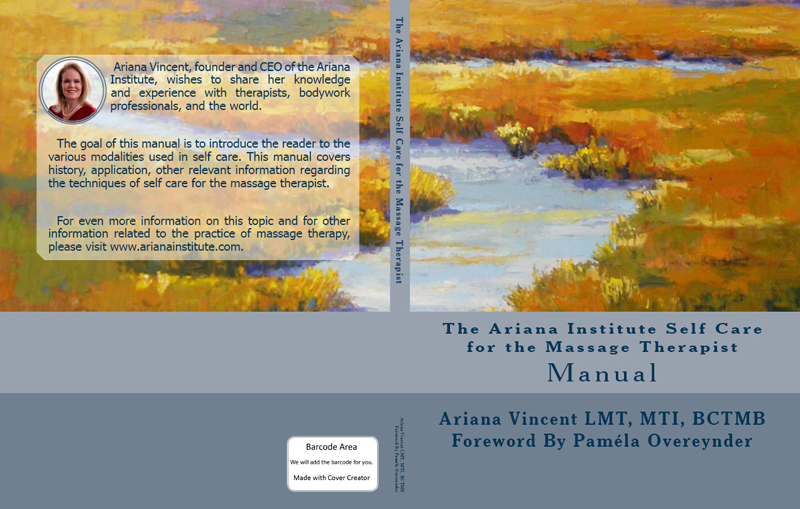
The Ariana Institute’s Self Care for the Massage Therapist Manual is part of a series of massage manuals that are designed to help deepen the knowledge of current massage therapists and introduce new massage therapists to the world of massage and bodywork. The Self Care for the Massage Therapist Manual features topics that are also available as NCBTMB approved online CE courses through the Ariana Institute at www.arianainstitute.com/ce-online/, including:

  • Self Care and Body Mechanics
  • Stretching and Breathing
  • Meditation as a Therapeutic Tool
  • Mindfulness in a Therapeutic Setting

Self Care_BookCoverPreview Continue reading “Meditation”

Posted in Ariana Institute, Ariana Vincent, Body Mechanics, CE Classes, continuing education, Massage Therapy, Meditation as a Therapeutic Tool, Mindfulness in a Therapeutic Setting, Personal Stories, Self Care for Massage Therapists, Stretching and Breathing, Therapy ManualsTagged , , , , , , , , , , ,

Exploring the Path of a Massage Therapy Instructor


Choosing Your Path

There are myriad ways you can configure your career as an MTI. You can work part-time or full-time, you can use your experiences as an MTI as a stepping-stone to another career, you can focus on being an MTI as a second career, you can blend teaching with your current vibrant massage therapy practice, or you can supplement your retirement income by becoming an MTI. There are opportunities to work as an independent massage therapy instructor like I do, you can work as an instructor at an established massage therapy school, and/or you can work for a nationwide company that provides massage therapy classes throughout the U.S. Continue reading “Exploring the Path of a Massage Therapy Instructor”

Posted in Advanced Massage Techniques, Ariana Institute, Ariana Vincent, CE Classes, continuing education, Massage Educators, Massage Therapy, Massage Therapy Instructor, Medical Massage, Mind-Body, NCBTMB, Practice Building, Self Care for Massage Therapists, Spa Techniques

Mother and Child: Enveloped By Love

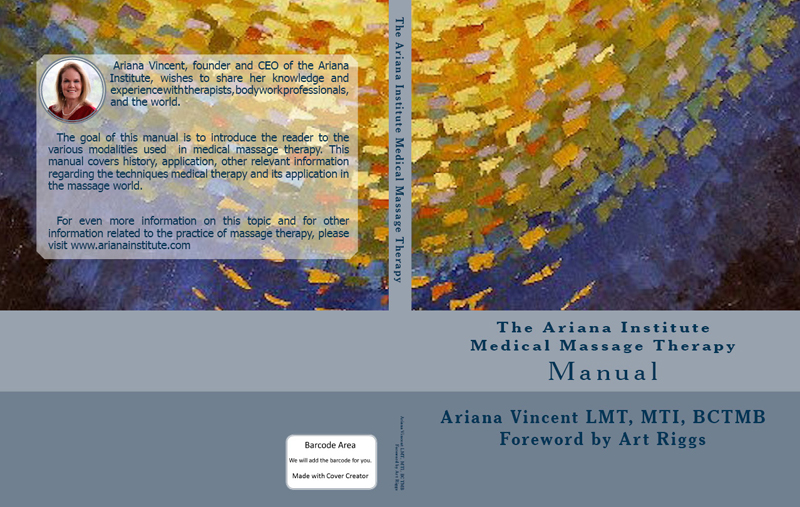
The Ariana Institute’s Medical Massage Therapy Manual is part of a series of massage manuals that are designed to help deepen the knowledge of current massage therapists and introduce new massage therapists to the world of massage and bodywork. The Medical Massage Therapy Manual features topics that are also available as NCBTMB approved online CE courses through the Ariana Institute at www.arianainstitute.com/ce-online/, including:

  • Prenatal Massage
  • Headache and Allergy Relief
  • Lymphatic Massage
  • HIV/AIDS Information for Massage Therapists
  • Pain Management
  • Geriatric Massage

----AI_MEDICAL_BookCoverPreview Continue reading “Mother and Child: Enveloped By Love”

Posted in Ariana Institute, Ariana Vincent, CE Classes, continuing education, Geriatric Massage, Headache and Allergy Relief, HIV/AIDS Information for Massage, Lymphatic Massage, Massage Therapy, Medical Massage, Pain Management, Personal Stories, Prenatal Massage, Therapy ManualsTagged , , , , , , , , , , , , ,

CranioSacral Therapy: A Lighter Touch

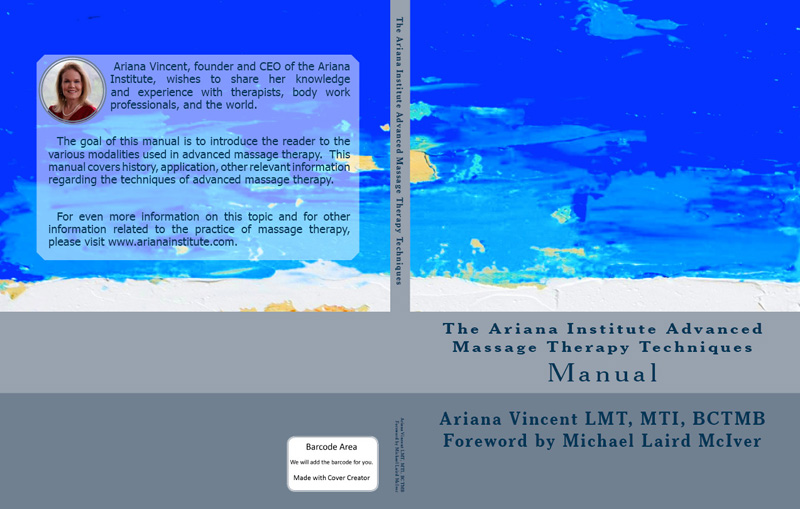
The Ariana Institute’s Advanced Massage Therapy Techniques Manual is part of a series of massage manuals that are designed to help deepen the knowledge of current massage therapists and introduce new massage therapists to the world of massage and bodywork. The Advanced Massage Therapy Techniques Manual features topics that are also available as NCBTMB approved online CE courses through the Ariana Institute at www.arianainstitute.com/ce-online/, including:

  • CranioSacral Therapy
  • Sports Massage
  • Chair Massage
  • Deep Tissue Upper Body
  • Deep Tissue Lower Body
  • Addiction Recovery and Therapeutic Massage

----AI_ADVANCED_BookCoverPreview (1)  Continue reading “CranioSacral Therapy: A Lighter Touch”

Posted in Addiction Recovery, Advanced Massage Techniques, Ariana Institute, Ariana Vincent, CE Classes, Chair Massage, continuing education, CranioSacral Therapy, Deep Tissue, Massage Therapy, Personal Stories, Sports Massage, Therapy ManualsTagged , , , , , , , , , , , ,

Mindfulness

The Ariana Institute’s Self Care for the Massage Therapist Manual is part of a series of massage manuals that are designed to help deepen the knowledge of current massage therapists and introduce new massage therapists to the world of massage and bodywork. The Self Care for the Massage Therapist Manual features topics that are also available as NCBTMB approved online CE courses through the Ariana Institute at www.arianainstitute.com/ce-online/, including:

  • Self Care and Body Mechanics
  • Stretching and Breathing
  • Meditation as a Therapeutic Tool
  • Mindfulness in a Therapeutic Setting

Self Care_BookCoverPreview Continue reading “Mindfulness”

Posted in Ariana Institute, Ariana Vincent, Body Mechanics, CE Classes, continuing education, Massage Therapy, Meditation as a Therapeutic Tool, Mindfulness in a Therapeutic Setting, Personal Stories, Self Care for Massage Therapists, Stretching and Breathing, Therapy ManualsTagged , , , , , , , , , , ,

Copyright © 2026 Ariana Institute